



Andrea and Rachel were sitting at their usual table for their regular Tuesday girls’ time. A short time later Sydney came in looking like she’d been crying and like she hadn’t slept at all. When the other two saw her they immediately jumped up and ran over to her, put their arms around her, and asked her what was wrong. Sydney began to cry, Andrea and Rachel guided her towards the table. Sydney sat down while the other two stood there on either side of her, still with their arms around her. Eventually, Sydney stopped crying enough to tell them that she had just gotten a notice that her car was going to get repossessed if she didn’t bring the payments current on her. The two of them asked her how far behind she was. Sydney told them that she was going on 4 months behind.

Rachel and Andrea sat down and continued to comfort Sydney along with asking what caused her to be so far behind. Sydney said that she wasn’t sure how she got that far behind, but that she never seems to have enough money and that she feels like she’s always living paycheck to paycheck. The other two said they often felt that way themselves. Even though they told her that, they were both wondering to themselves how Sydney didn’t pay her car payment for 4 months. Andrea and Rachel both considered themselves to be good at handling their money and struggled to understand what happened with Sydney. After all, Sydney had a good-paying job and always looked like she was doing okay.

As the 3 of them continued talking, Sydney began to explain that between her rent, utilities, car payment, car insurance, credit card payments, groceries, etc. she consistently seemed to have to delay one or sometimes several of them to have enough money for whichever bill was the farthest behind. Sydney told her friends that she’s even tried transferring the balances from her credit cards with a higher interest rate to one with a zero-percent interest offer so that she could use that time to get caught up. She said that every time she’s done that, she still wasn’t able to get caught up. She continued to say that because she wasn’t able to get caught up before the zero-percent offer expired, she would be charged by the credit card company at their standard rate, which typically was as high or higher than the one she paid off. Sydney went on to tell them that on top of that she never closed the original credit cards and would end up using them to pay for her gas and groceries so that she could use her income to pay towards her other bills.

Rachel and Andrea were shocked and almost speechless at this news and could only keep telling Sydney that things would be okay. Even though they were telling her this, they had a lot of doubt in their minds that she was going to be okay. The 3 parted their ways that morning and the two told Sydney that they would check in on her after work. All-day during work, Andrea and Rachel kept thinking about what Sydney had told them. This caused them to start thinking about their money situation and they realized that they were not much better off than Sydney. If either of them missed one paycheck, their financial world could begin to crumble. During lunch, Rachel called Andrea and told her she realized how unstable her finances were. Andrea affirmed Rachel’s admission by telling her that she realized the frailty of her situation also. Both of them talked for a while and began to ask each other how the 3 of them got this way.

After work, the three of them got back together and talked about how each of them was unstable in their financial life. They told one another that they thought they knew what they were doing with their money, but Andrea and Rachel said while they were not as bad as Sydney, they were not too far off from being in a similar situation. As the three talked, they wondered how they got this way and why they didn’t know better how to handle their money. They started reflecting on their past and realized that no one showed or told them how to handle their money. Not their schools, their parents, or any other adult in their lives. They remember that they learned how to do a checking account in their math class, but they didn’t learn much else about their money or other personal financial issues. Once they determined this, they wondered how they learned to handle their money if they didn’t learn it in school or from their parents. Eventually, the concluded that they just learned from other people as they went through their lives.
Rachel, Andrea, and Sydney are not unlike the majority of Americans who think they know what they’re doing financially but find themselves living paycheck to paycheck and very often even living beyond their means causing their situation to incrementally get worse. In fact, this is not just the case with Americans. People from many other countries are also relatively naive about how best to handle their money and finances.

There are several reasons that personal finances aren’t taught in schools. The Prussian school system, which most schools are based on, didn’t focus on teaching people how to handle the money they earned. Their main focus was on teaching students how to be workers in factories, government offices, clerks to industry, obedient solders and to have a common thought process about major issues. Another reason is that a majority of teachers never learned how to manage their finances and personal finances are not part of any standardized testing, so the teachers have to focus on the subjects that are part of those tests. Because personal finances aren’t part of the standardized tests, funding for teaching it is limited or non-existent.
Another reason for it not being taught lies with the stigma that surrounds money and personal finances. Because it’s “personal” many people feel that talking about it in a public forum is wrong. On top of that, a lot of people operate from a scarcity mentality when dealing with money so they refrain from talking about it. Unfortunately, because personal finances are not taught in schools or positively talked about outside of school, the majority of people fail to learn how to properly manage their finances and find themselves like Rachel, Andrea, and Sydney.
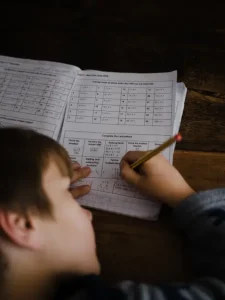
Adding personal financial education into the existing curriculum wouldn’t need to be a momentous undertaking because elements of it could be worked into existing curriculums from kindergarten to twelfth grade. Doing it that way would allow the subject to become more of an everyday topic instead of a big hairy monster like it is today. Also, teaching children about it from when they’re young until they become adults would make those lessons become ingrained in their minds and not something that is taught for one semester in one of the high school years.
So, let’s not let the story of Andrea, Rachel, and Sydney continue to be a similar story that’s repeatedly played out by the majority of adults throughout the world. Talk with your school boards, politicians, and other officials to modify the current curriculums that are taught to our children so that this cycle comes to an end. Not only will it help the future generations, but it will help the countries that implement it by allowing them to have a more stable economic base and lessen the need for large social programs to assist those that end up in financial hardships.
I hope today’s blog was encouraging to you and provided information to help you and others better handle their financial matters. My purpose through these blogs is to inform the reader about money and financial issues so that we all can become better managers of our assets. If you like what you read, make sure to sign up so you can receive my weekly posts. The goal of Take Two Financial Coaching is to provide the necessary information to help families and individuals break the chains of debt, build lasting wealth, and become outrageously generous.
For those who are tired of being in the rat race or just want to better manage what they earn, I am available to have a Free 60 Minute Conversation to discuss your situation and how I can help you change it. Go to my calendar at https://ramseycoach.com/taketwofinancialcoaching to arrange a time that works for you. You can also email me at taketwofinancialcoaching@gmail.