


In our previous installment, Luis broke a tooth while eating food from a local festival he was attending with his children. Because it was the weekend, his regular dentist wasn’t open, causing him to seek out the services of an emergency dentist he was referred to by his regular dentist’s office.

The dentist examined the tooth and told him he would need to do a root canal because the nerve was exposed. The dentist also told him he would need a crown on that tooth so it could be saved. The bill for the root canal and the emergency office visit was going to cost him $1,100. Hearing the cost Luis about fainted and didn’t know what he was going to do. He didn’t have that much credit left on all of his credit cards put together.
He called each one to raise his limit so he could pay for the desperately needed root canal. Unfortunately, each one declined him because his debt to income ratio was too high. He felt like crying when he told the dentist he’d have to wait until he could get an appointment to do the root canal with his regular dentist.

You see, Luis became divorced a couple of years ago resulting in legal fees of several thousands of dollars and child support for three kids. Luis’ rent is $1,600 per month, his car payment is $475 per month, utilities run around $230, including cable. Once he pays all of his bills and groceries, he’s lucky to have $25 left in his account.
When he has his children, every other weekend, he likes to take them out for dinner and activities since he hasn’t seen them for a while. He also likes taking them out so they’ll enjoy themselves when they’re there. Most of the time when he takes them out, he puts the expenses onto his credit cards since he rarely had anything left from his paychecks.
The dentist suggested Luis apply for a DentaCharge card and use that for the procedure. He told him that they’re pretty flexible, especially when the applicant calls from his office. Being in pain, Luis desperately called the DentaCharge card number and a short time later, he was approved. In his desperation, he never looked at the interest rate he’d pay. He also used the card when he saw his regular dentist for the crown. When the bill came, he discovered the interest rate was 29.75% and the minimum payment was $100.
The stories of Paul, Amy, Gabriela, Luis, along with Hope and Tyler are examples of the majority of Americans today. Each of them goes through their lives handling their money and personal finances like most of their friends, families, and co-workers. This includes the use of credit to fund many of their purchases and expenses.

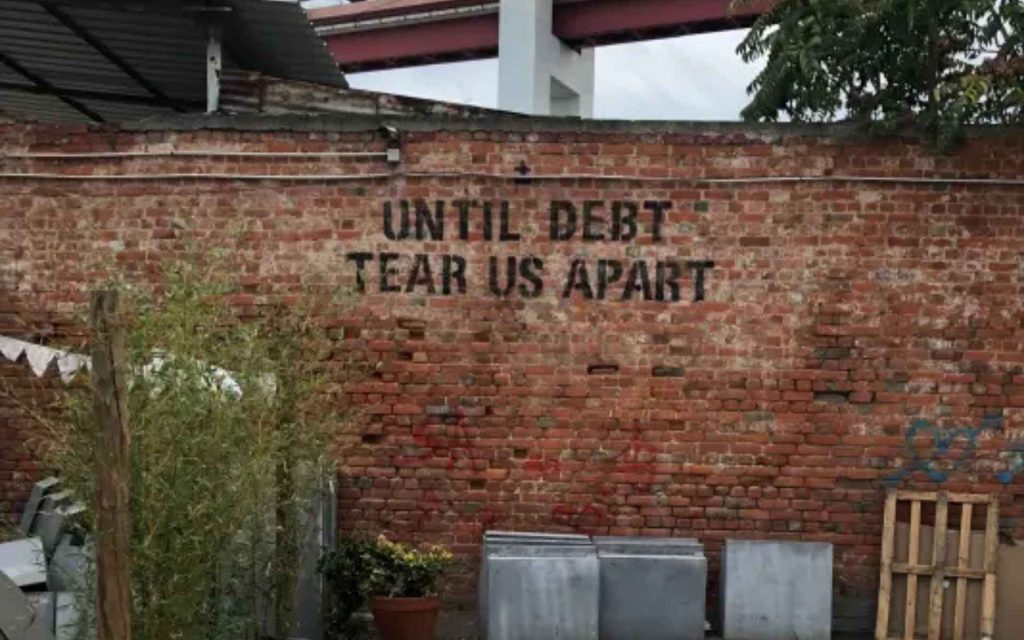
Complacency with the use of credit and having debt has become so standard that when someone says something about getting completely out of debt or never using debt, they’re looked at like a three-headed creature. People look at them in wonder, amazement, but mostly disbelief. Often anyone who talks against using credit is considered foolish and out of touch with the way things are.
That’s one of the reasons why almost 8 out of 10 Americans are living paycheck to paycheck ₁. Because these many people are living with no margin between what they earn and what they spend, a lot of them feel there is no other way and that using credit is a normal part of life.
BUT IT’S NOT A NORMAL PART OF LIFE! Not too many generations ago, the idea of using credit, for most people, was considered something a fool or unwise person would do. Those that did use credit were typically looked down upon because of their lack of judgment.

Unfortunately, banks and other lenders have changed that opinion through massive marketing campaigns showing consumers who use credit are wise and sophisticated. They even go as far as convincing consumers and business leaders this is wise under the premise of leveraging their money.
What they fail to disclose is how using credit weakens a person’s or business’ financial stability because they eventually start living beyond their income. This causes them to enter a vicious cycle of using more credit to maintain the lifestyle or business operation they believe is necessary.
By drawing consumers and businesses into the mentality of regularly using credit, more of them end up filing for bankruptcy once they are no longer able to pay the monthly payments. When that happens, additional strain is placed on the economy because the lenders and the businesses that offer or use credit need to raise their rates or prices to offset the loss from the bankruptcy.
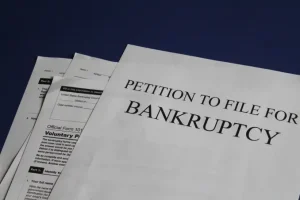
Bankruptcy also weakens the local economy when businesses have to shut down. The employees, property owners, lenders, and many others become affected by collateral fallout from the business closing. Furthermore, local governments are affected through lost revenues from the taxes the employees, consumers, and businesses pay to them. Added to the loss in revenue by local governments are applications for unemployment and other government assistance programs.
We’ve seen how commonplace the use of credit is today, now we’re going to look at ways to change that mentality so we’re able to get out of the confinement debt puts on our lives. As mentioned above, debt wasn’t always thought to be a good idea and most people avoided it. We also can return to those ways by learning to manage our money as we were intended to. When you read the Bible and other religious texts, we’re told that we need to properly manage our gifts and talents. Giving these away to others because we live beyond our means isn’t managing these things well.

To regain control of the resources we’ve been given we need to develop a plan to manage them. This plan comes in the form of a budget. Budgets don’t have to be constricting, but they do need to be a guardrail for how we care for our assets. Using a Zero-based budget gives us that control and guidance we need without binding us. It also allows you to decide where and on what you’re going to spend the money you get without feeling guilty for doing so. It has been said that a Zero-based budget permits you to spend on what you decide ahead of time to do.
The other mentality we need to look at is being honest with ourselves between what is a “NEED” and what is a “WANT”. Too often we say we need something when it really is a “Want”. There are 5 basic needs that most people have. They are food, shelter, clothing, utilities, and transportation. Most of us, in developed countries, have our needs met. So, anything beyond that is a “WANT”.
It is very easy to confuse “WANTS” & NEEDS” by the words we use to justify our reasoning for buying something. That new dress may be viewed as a NEED, but as long as we have dresses or other clothes in our closet, it’s most likely a want. The same goes with the “new” minivan because we’re having a baby and our 2 door car isn’t sufficient (spoiler alert, it is). When we go to purchase something, we need to be honest with ourselves and call it what it is.
I hope today’s blog was encouraging to you and provided information to help you and others better handle their financial matters. My purpose through these blogs is to inform the reader about money and financial issues so that we all can become better managers of assets we’ve been given. If you like what you read, make sure to sign up so you can receive my weekly posts. The goal of Take Two Financial Coaching is to provide the necessary information to help families and individuals break the chains of debt, build lasting wealth, and become outrageously generous.
For those who are tired of being in the rat race or just want to better manage what they earn, I am available to have a Free 60 Minute Conversation to discuss your situation and how I can help you change it. Go to my calendar at https://ramseycoach.com/taketwofinancialcoaching to arrange a time that works for you. You can also email me at taketwofinancialcoaching@gmail.
Credit Complacency – Pt. 1 https://ramseycoachcomtaketwofinancialcoaching.wordpress.com/2020/10/30/money-dos-donts-credit-complacency-pt-1-of-3/
Credit Complacency – Pt. 2 https://ramseycoachcomtaketwofinancialcoaching.wordpress.com/2020/11/06/money-dos-donts-credit-complacency-pt-2/